
ANZAC Day Address 2026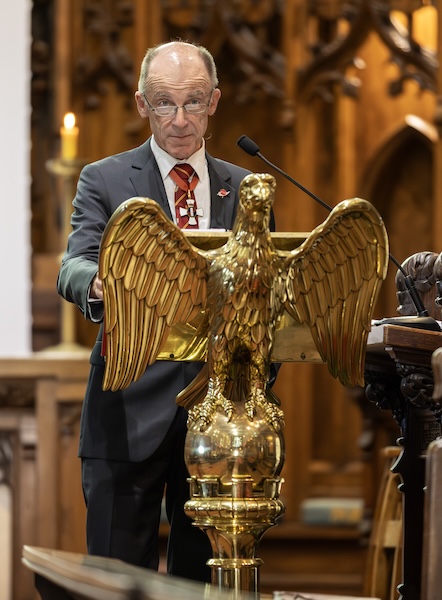
Delivered by Emeritus Professor Ian Civil (Parnell, 1966-70), CNZM, MBE (Mil), KStJ, ED in the Memorial Chapel, Saturday 25 April 2026.
‘They shall not grow old as we that are left grow old. Age shall not weary them, nor the years condemn.’
When I first gave an ANZAC presentation in the Chapel in 1994, I was unquestionably too young to understand what this meant. Attending today with my year group who began their educational journey at King’s 60 years ago, I think we have a greater understanding of weariness and the condemnation of age. So, if our military forbears did not have to suffer these challenges, what were theirs?
When I spoke in 1994, it was the 79th anniversary of the Gallipoli campaign. Today is the 111st. I reflected on the difference between the world at that time, and the present day. Travel and communications were on a different plane in 1915 and most ANZAC soldiers had not been out of their Province, let alone New Zealand. Many saw it as embarking on a great adventure with the added bonus of serving King and Country. The world in 2026 is even more different than it was in 1994, when mobile phones were uncommon and computers not part of everyday activity. AI was a part of science fiction. Looking at the changes through a long-distance lens I see society being progressively more aware of what the sacrifices of military service may be, and service for the greater good of society becoming less common.
Serving one’s King and country was a cultural expectation, a century or more ago. World societies were intrinsically more fragmented in the centuries prior to 1915, and belonging to a strong societal group very important. Without such strength entire societies could be overrun and eradicated. Service and sacrifice were expected. While the ANZACs understood service, the sacrifices they were about to suffer as a result was not entirely apparent to them. The ANZACs individually did not expect to die any more than any other person on a given day does, but they also did not expect to be away for years and return with irreparable damage to their mental and physical health. These were some of the sacrifices they were about to make. As I have come to appreciate in my medical career, patients are not afraid of death, but of complications which leave them alive but unable to enjoy any quality of life. Service-people too, understand that they may die and do not fear it. They understand that this is a possible outcome of their service. What the ANZACs possibly did not appreciate, partly because of the nature of post-injury care in the early 1900s, was that there was a third outcome, lifelong disability. People today are much more aware of this third outcome, with recent wars resulting not only in well-publicised physical impairments, but also psychological impairments such as PTSD, and health impairments from chemicals such as Agent Orange and depleted uranium, amongst others. It has even been postulated that these physical impairments may affect service-people’s children and grandchildren.
Service and sacrifice are almost the opposite of narcissism, which can be defined as self-centeredness involving a sense of entitlement. Individuals with this trait have an unreasonably high sense of their own importance. These days we hear quite a lot about narcissism, partly in a criminal context and partly because it is much more recognisable as a personality trait in day-to-day life. Why this is so in 2026 I am not qualified to say but such traits make it much less likely that individuals would choose to minimise their individual importance, join a collective body with a common aim and potentially make sacrifices for no personal benefit.
My own role model who exemplified the service and sacrifice of service-people, was Sir Edward Dunlop. This Australian surgeon, Wallaby (in the first Australian team to have a series win over the All Blacks and win the Bledisloe Cup), and WW2 hero, was captured by the Japanese in Indonesia in January 1942 and subsequently imprisoned in Changi and other prison camps in Thailand. He looked after the Allied servicemen imprisoned at that time until VJ Day in September 1945, during which time they were forced to construct parts of the Thai-Burma railway. Over this nearly 4-year period he saved the lives of many by providing improvised surgical care, and the story of his life, both during the War and afterwards, is replete with examples of serving his compatriots and sacrificing any personal objectives.
That we are here today, and able to celebrate the service and sacrifice, not only of the ANZAC servicemen of 1915 but also of service-people who have made sacrifices on our behalf in subsequent decades, is a testament to the value of these qualities. That we should model, teach, and instill them in younger generations, is a vital aspect of a viable and thriving society. In the recent past we have seen around the world, and in New Zealand, examples of where sacrifices on behalf of society were not prepared to be made and the social discohesion resulting from that, clear for all to see.
We have much to be grateful for, that our service-people over the years made the sacrifices and provided the service that they did, none numerically greater than in the First WW. On days like ANZAC day however, it’s not all about 1915 but a time for reflection on the wider concept in society of service and sacrifice. This is traditionally considered in a military context but much more prevalently seen and required in day-to-day life, and, where present, reflects a healthy and benevolent society.
As we look around the world today, we see numerous examples of self-centred behaviour which seldom produces any good to society at large. While the military is not all positive in its contributions to society, it does define service and associated sacrifice. As the world has developed to empower more individual success it has simultaneously reduced the perceived value of service. That the gap between the richer and poorer is greater now than it ever has been, is a fact, and certainly not something our ANZACs were fighting for. A strong and mature society is cooperative, thoughtful, and recognises the needs of all. ANZAC Day is the perfect time to reflect on how some of our population were drawn to contribute to wider goals, even at the risk of their lives. This is the day to ask ourselves how can we serve and what sacrifices would we be prepared to make towards the greater good.